Tuesday, September 20, 2011

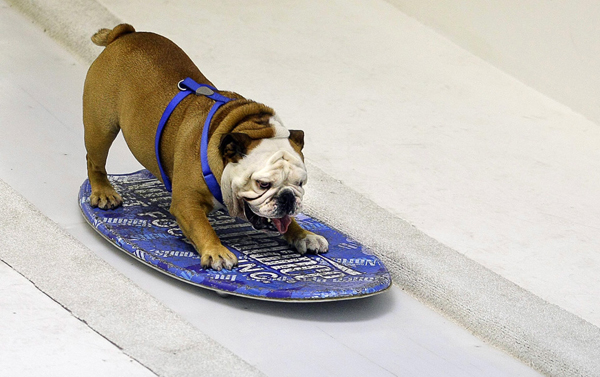
Teaching Dog Tricks - The Easy Way

By Andrew Strachan


If you were to ask what the quickest and easiest method was for teaching your dog a new trick, the answer would be - work with the nature of your dog, not against it. What we mean here is that you should look at what tricks your dog naturally does, or look for a dog trick 'in the making', like naturally putting a paw on your knee or rolling over etc.

If you choose a dog trick that naturally occurs, half your work is already done. Your dog will probably be eager to please as most dogs are and should therefore respond well to rewards. You can build on this to reinforce your dogs' natural ability rather than starting an entirely new dog trick.

Which Dog Trick Do You Choose?

Observe your dog and watch out for a potential dog trick. This may be something as simple as crawling along on its belly to, catching a Frisbee or a ball. As soon as your dog 'performs' one of it's natural tricks, associate it with a hand gesture or verbal command and then reward your dog with its favorite treat. It won't be long before your dog learns the procedure.

Eventually over time, you will be able to cut back on the rewards until your dog will perform the dog trick with just the hand gesture or verbal command such as 'fetch' or 'go get'. Now that the new trick is firmly lodged in your dogs' head, you will be able to build on it.

For example, if you have taught your dog to catch a Frisbee, how about increasing the distance that he will catch it from, or throw two Frisbee's one after the other. Get your dog to catch one, drop it and then run for the other!

Popular Dog Tricks

Some of the most popular dog tricks are 'sit' and 'come' etc. These are pretty simple to teach. To teach your dog to sit, with your dog standing firmly press on its hind quarters directly above it's back legs whilst at the same time saying the word 'Sit' quite assertively but NOT shouting. Most dogs will naturally sit. At this point, heap lots of praise on your dog and then give them a treat. After several repetitions of this, your dog will soon learn what 'Sit' means. Do not try this on older dogs that may have arthritis in their hind legs or hips.

If your dog does not sit when told, NEVER scold it. Just ignore it and try again another time. Otherwise your dog will associate 'Sit' with being scolded. If your dog persistently fails to sit, try another trick.

Each dog has different talents.

To teach your dog to come is simple. When your dog is at a distance, say loudly but not shouting 'Come here' or 'Come'. This will usually get your dogs' attention. Repeat the statement 'Come on', 'Come here'. Most untrained dogs at this point will probably look away and carry on with whatever it was doing.

At this point walk up to your dog but keep within around 5 feet away. Say 'Come here'. Your dog will probably now come to you. When he does, it's time for a lot of praise and a treat. Repeat this but increase the distance that your dog has to walk towards you more each time. Eventually, your dog will instinctively come to you whenever it hears you shout 'Come here', from any distance.

Again, if your dog fails to come to you, DO NOT scold it. I once got asked "Why won't my dog come to me?" On further investigation I found out that every time the dog ran away and then failed to come back, the owners would scold the dog when they got hold of it again. WRONG! The dog started to associate the command 'Come here' with a scolding. Totally the opposite. No wonder the dog failed to come to command.

Another dog trick you can try is 'Paw'. This involves saying 'Paw' then gently lifting the dogs paw with your hand followed by lots of praisetreats. After a while saying 'Paw' will cause your dog to raise its paw. You can extend this to two paws where your dog 'Sits pretty' on its haunches.

Another trick is 'Speak'. This usually works best with a naturally vocal dog. Every time your dog howls or makes a funny noise, praise the dog whilst saying the command ' Speak'. Eventually your dog will speak on command.

Teaching your dog a new dog trick should be a fun experience for both of you, and will give you lots of quality time together. Enjoy!

Article by Andrew Strachan. Find out more about dog behavior training and types of dogs at http://www.types-of-dogs.com

Article Source: http://EzineArticles.com/?expert=Andrew_Strachan


Grab The Bookmarketer For Your Site

Tuesday, September 13, 2011

I Am The Dog Whisperer

By Ami Moore


I am the Dog Whisperer. All too often I see you after a traumatic experience with your dog, when you are scared and upset. You call me to rescue you from chaos and insanity, but it is already too late.

Your life is in shambles, the neighbors hate you, a child is disfigured, the victim is pressing charges, the police are at the door, and your home is at risk. I, however, can't turn back the hands of time and prevent the fatal attack, but I can help you and your family move forward and plan for tomorrow. I am the Dog Whisperer.

When your heart is broken, I'm quickly on the scene. I will repair the lost hope; rekindle the loving feeling that you once had toward your dog. In time, I will help you learn to trust your dog again, and I will help you dog learn to trust in you once more. I am the Dog Whisperer.

Sometimes you are frustrated with the inconvenience and expense of having to hire me. But when you call, I will be right there with the tools and training to resolve your dog training concern so that you, your family and your community can feel safe and secure. I am the Dog Whisperer.

I am available to help you house train your little Christmas puppy. I am there to place the missing obedience training on your out of control, hormonally driven adolescent dog so that he can stop jumping up on Grandma. We can help the shelter or rescue dog fit into your lifestyle easily, safely and sanely. Even though you may have picked a dog that does not fit in with your lifestyle: it's too big, too mean, too hyper, with my training and gentle touch, I can make sure that the dog learns to follow your direction. I am the Dog Whisperer.

In the best of all worlds, you will call me to help you with your new spring time puppy, you'd call me to help you pick the right dog from the shelter and you'd call me to so that I could talk you out of purchasing that puppy from the pet store. I offer products and services to help protect that which is yours. I read magazines, attend seminars and belong to trade groups so that I can increase my knowledge and my ability to help you solve your problems. I am the Dog Whisperer.

I am a Dog Whisperer. I am a psychologist, a teacher, a poet, a shaman, an artist, a preacher, a parent. I deal with people that are upset and dogs that are upset; I calm the savage beast within each one of you. I have been trained to secure and protect your children, your home, your assets and even your life. I have devoted my life to help you have the American Dream; a happy family with a happy dog.

Who Am I? I am an Animal Rights Activist. I believe that animals have the right to be educated so that they can fit into our modern life. I believe that it is inhumane and immoral to have an untrained, uneducated dog that is a danger to the family and the community. Our domestic dog has the right to have the kindest, the best, the most effective, most humane training tools and methods used for their education.

Who Am I? I am a Pro-Choice Activist. People have the right to have all training tools and training methods at their disposal so that they can make an informed choice as to what tools, techniques and tips will work best with their dog, their lifestyle and their personality.

Who Am I? I am a Pro-Life Activist. I believe that murdering dogs for bad behavior when a particular training tool or training technique fails them. If one training tool or technique fails, then the dog and the owner have the right to seek relief and rehabilitation from other dog professionals that may use alternative techniques.

Who Am I? I am Pro-Family Values. Good families deserve to own good dogs. Good dogs are dogs that are well-mannered, tolerate children, are polite to strangers and do not poop, pee or bite where or when it is inappropriate. Good dogs create good families, good families create good neighborhoods, and good neighborhoods create good cities.

Who Am I? I support Breed Tolerance. All breeds can be trained and educated to be good family members, good community members and assets to our modern life. I despise Breed Bigots, the radical elements in American society that claim a dog's breed matters more than his behavior. Punish the deed, don't exterminate the breed.

Who Ami I? I defer to Mother Nature, for she always knows best. The best way to rehabilitate a dog is to treat it like a dog, not like us. The dog is born on to this planet to experience life as a dog, not a person. Mother Nature is always right, always appropriate and never makes mistakes. So if you communicate with a dog in his language respecting the particulars of his dog culture, then a good dog is always the result.

Who Am I? I am a Fido Freedom Fighter: I believe that dogs think and feel much like people do. I do not believe that the dog is a unthinking, unfeeling, "black box" that operates on a simple reward/punishment paradigm. I know that the dog dreams, the dog remembers, the dog thinks and that the dog has a soul, in his own doggie way. I believe that dogs deserve to have as much freedom as good manners and good grooming will allow them in our modern lives, which means well mannered dogs should be allowed everywhere. I believe that good dog training should not be a crime. I am the Dog Whisperer and I support the National Urban Eden Day's "Good Dog" Doctrine.

The Urban Eden "Good Dog" Doctrine

The public has the right to be safe from dog bites. The public has the right to act stupid around dogs, and not get bitten.

The public has a right to clean, healthy, well-groomed, well-behaved, "invisible" dogs.

The public has the right to not step in dog droppings.

The public, when in a public space, has the right to not be pestered by a dog's bad behavior such as: barking, sniffing, being jumped up on, licking, pawing, whining, growling, biting, humping of things, peeing on things. For more information on Urban Eden Day go to http://www.dogdoright.com/urban-eden-day.htm

ALL ABOUT AMI

Her first and true love is canine behavior modification and problem solving. Ami Moore has pioneered the use of electric dog training equipment as positive reinforcement, and combined this groundbreaking innovation with the dog's natural drive to follow a strong leader.

From my point of view, a proper and balanced dog-human relationship is something that every person who has dogs in their life should experience, just as everyone should experience falling in love.

Student's ask me why I train my dogs, I tell them that "From my point of view, I train because I am very, very lazy and I want to to where I want, when I want; and I want to take my dogs with me when I go." And then, I always add, " Training dogs, my personal dogs, equals freedom for for them. I want my dogs to have a beautiful life from a dog's point of view. For a dog that means he has someone to follow and somewhere to go. I want my dogs to be "lucky dogs" not liabilities. http://www.dogdoright.com/


Article Source: http://EzineArticles.com/?expert=Ami_Moore


Grab The Bookmarketer For Your Site

Tuesday, September 6, 2011

For working dogs, retirement can be challenging

By SUE MANNING
Associated Press

Some working dogs spend their lives outdoors and may not be house trained.


For nine years, Brac has worked like a dog at a private golf club, chasing geese and sparing members the indignity of goose poop in their spikes.

But the 10-year-old black-and-white border collie has arthritis in his legs, cataracts in his eyes and he's lost interest in the birds, so it's time for him to retire.

Larry Jones, assistant superintendent at the Roaring Fork Club in Basalt, Colo., can't keep him and has been trying to find him a good home.

"He loves everybody. He's really a sweet dog. And even though he's losing his working mojo, he still has a lot of pet mojo left," Jones said.

Working dogs like Brac are often forced to retire by age, illness or injury. But finding adoptive homes for retired working dogs can sometimes be challenging if they require medical care or have behavioral issues. Some working dogs like Brac spend their lives outdoors and may not be house trained. Others may have trouble acclimating to basic daily routines like riding in a car or climbing stairs.

Marie Turino, 35, of Freehold, N.J., fostered nearly 30 racing greyhounds before she adopted two.

"All they've ever seen is a track and a crate. They've never been in a home before, never seen a mirror or stairs," she said. She adopted Anna and Jasmine in 2002 and 2003, from different racetracks, when both dogs were 2.

"They don't know normal house sounds. The first morning, I turned on my blow dryer and Jasmine came flying, then stopped on a dime, staring at me." One of her foster dogs "went crazy when she saw a mirror and kept poking it with her nose."

She has cared for dogs with ticks, broken bones, infections and cuts on their noses from muzzles.

But not all aspects of care are difficult. "They are crate-trained so they are easy to housebreak and they don't shed much," she said. "It's easy to brush their teeth, clip their nails and clean their ears."

In some fields, retiring dogs are typically adopted by the people who work with them. About 90 percent of the dogs in the Sacramento K-9 unit retire with their handlers, Sacramento County sheriff's Deputy Brian Amos said. The rest of the deputies find homes for the dogs.

Amos and his dog Jimmy had been together four years when Jimmy was injured in training and forced to retire in 2005. The hardest part for Amos came each morning when he left for work with his new dog, Jesse.

Jimmy would bark and whine. "I felt like I was cheating on him."

Jimmy has since died of old age, but he eventually took to retirement, becoming more relaxed and less anxious, Amos said.

Since 1950, Dalmatians with names like King, Bud, Brewer, Barley and Hops have been working with teams of Clydesdale horses to promote Anheuser-Busch, based in St. Louis, Mo.

Puppies are taught basic skills at the St. Louis stables, then go out with a Clydesdale team to learn from an older dog, said Jeff Knapper, general manager of the company's Clydesdale operations. They usually retire after four or five years on the job and are nearly always adopted by their handlers. If not, there is a high demand for them because Budweiser dogs "spend a lot of time greeting the public, have a great temperament and are very social," Knapper said.

Sled dogs pose a variety of challenges as house pets. Often they walk in circles because they've been tied to posts all their lives. They also need to be house trained and learn how to walk on a leash, climb stairs, walk across slick floors without falling and ride in a car without vomiting, according to Seth Sachson, who's adopted eight sled dogs. Sachson serves as executive director of the Aspen Animal Shelter and the Aspen Boarding Kennel in Aspen, Colo.

Tracy Sargent of Cedartown, Ga., runs K9 Search & Rescue Specialists, Inc., which has responded to hundreds of calls ranging from missing persons to plane crashes to natural disasters. If a dog works for her, it retires with her, she said.

But just like people, some dogs have a tough time adjusting to retirement, Sargent said. She uses rides, mini-training camps in the yard, more ball play, longer walks and extra attention to help them make the transition. Brooke, a German shepherd, worked full-time until she was 10. Then she slowed down, her vision dimmed and she had trouble jumping in and out of a rescue vehicle. Sargent took more than a year to fully retire Brooke, taking her on shorter trips and using her for confined searches. Eventually Brooke seemed happy to stay home and rest. She lived to be nearly 16, Sargent said.

Bailey, a 13-year-old English springer spaniel, has become Christy Judah's couch pal since retiring a few months ago after more than 150 land and water searches with the Brunswick Search and Rescue Team in Brunswick County, N.C.

"He loves to search and it is not a matter of not being able to sniff out the victim, but a matter of lovingly deciding that his aging body needed a rest," Judah said.

These days Bailey gets pampering, people food and access to a bed and couch, Judah said. To keep him sharp, they still play search games, but in smaller spaces with simpler problems.

In some cases, working dogs don't retire — and neither do their owners. Patti Gibson has been running after bloodhounds for 26 years as a founding member of Illinois-Wisconsin Search Dogs, which has gone on 390 searches.

"Retirement is a dirty word," she said. "I have never retired any of my four bloodhounds. The average life span is 8 to 9 years and mine have all lived to 13 to 14 years and worked until the day they died. Bloodhounds don't seem to want to stop working."

Gibson, who is 75 years old, says "everyone needs a passion — running behind a hound is mine. It's more exciting than crocheting."

Article source: seattletimes.nwsource.com


I've also compiled a list where you can adopt service dogs

http://www.militaryworkingdogadoptions.com/

http://www.petfinder.com/shelters/northernlights.html

http://www.guidedogs.ca/

http://www.adopt-a-greyhound.org/

http://www.autismdogservices.ca/

http://www.bcguidedog.com/

http://www.canineswithacause.org/

http://www.copedogs.org/

http://www.dogswithwings.ca/

http://www.mira.ca/

http://www.dogguides.com/

http://www.nsd.on.ca/

http://www.pacck.org/

http://www.pads.ca/

http://www.westcoastteams.com/


Grab The Bookmarketer For Your Site

Tuesday, August 30, 2011

Housebreaking A Dog The Right Way


Training a dog can be pretty challenging in some cases so you will have to find information that will help you along. There are a number of places that this information can be found, either online or at the local library. The type of information you find will be based on all the things you need to know about training your dog, such dog obedience and manners.

Tips to use for Housebreaking a dog

When people think about house breaking their dog they usually associate this with some sort beating, or humiliating of the dog. Nothing could be further from the truth, you see if you make the dog feel embarrassed or out of place, this can actually make things turn out worse.

It will probably leave the dog scared and uncertain. What you really have to do when house breaking a dog is have a place designated that you send the dog too. Once you have designated a place you should then associate a word with that place so each time yo take them there you say it. After a while the dog will associate the designated place with the word.

Rewarding the dog for good behavior

Once you have a designated housebreaking area for your dog where they you send them when you need to, be sure to reward the dog each time they go there. Rewarding your dog will build up your relationship with them. But remember in the process of getting your dog to obey you, this may take time.

Things to consider when stopping your dog from barking

Dogs barking when you dont want them too is common theme, if you want this to stop its up to get the relevant information. It is true that a lot of the time getting your dog to stop barking randomly can be quite challenging, but it is possible. A key thing to keep in mind is that if you are training your dog stop barking, remember to never give them a treat if they bark. If your dog associates getting rewarded with dog treats this may create more harm than good.

Dog training should be an enjoyable event, if you remember why you bought the dog in the first place, all those joyous images will coming flooding back. There is probably nothing more rewarding than having a well discipline dog, happy dog training.

John has been writing articles on line for a number of years. He enjoys writing about a number of topics and has websites that reflect this check out hella fog lamps or at car fog lamps to see some of his other work


Grab The Bookmarketer For Your Site

Tuesday, August 23, 2011

The Psychology of Successful Dog Bathing

By DuAnn Lustig-Chambers


"Can I wash my own dog? It can't be that hard can it?" These are the words that I hear everyday as I go about my business working at the Pooch Parlor in Northern Idaho. Each time I walk a customer through this process, I find myself wondering why in the world something so simple is so doggone hard to explain. Washing your own dog may seem simple, but - only if you think and speak 'dog' - the language of your own dog.

I run a shop for full service and self-service dog grooming and bathing, and I LOVE it! There are dogs, and owners, of every size, every breed, and every temperament that come in to use the self-service doggie wash. Most owners are excited, some are scared, and some are cocky, but no matter who they are, or what they do for a living, there is nothing quite as intimidating for them as washing their own dog in public! The thought of doing this can give even the most confident person, performance anxiety, and for good reason! It is a true test of trust and tolerance and friendship for the person and dog companion. And, on a very basic level, it is an honest mirror for the owner, and how he or she deals with life, and with conflict. The likelihood of a successful experience for both is completely dependent upon the psychological relationship that exists between them, and, to a large extent, the ability of both to comprehend the body language of the other. You may be surprised to know that I have found that dogs are supremely better at reading their humans than their humans are of reading them. It is this relationship between human and canine, that shows itself without modesty during bathtime, and, keeps me coming to work day after day with a smile on my face.

My clients have been giving their dogs baths in my shops for 10+ years now, and, each year is more entertaining than the last when it comes to watching regular people washing their own regular dogs. The average person that comes through our doors is highly successful, which usually means - intelligent - and, because like attracts like, so is their dog. And, so why oh why, they ask me, should this simple task of cleaning their dog be so difficult? I ask them time and again, "Well, how well do you speak dog?" Invariably, their reply is a blank stare. So, this is the time to ask yourself, "How well do YOU speak dog?"

There is a lot to say about the theories of why dogs and humans behave the way they do, but I'm going to get back to the practical things to look for while bathing your own dog. The bottom line to remember is that your dog's energy and personality traits are a mirror to your own. Take this into consideration when attempting to get him into the tub and have him be happy about it.

1. Deciding when to bathe your dog. Timing and Personality traits: Timing is important. Look at your own needs regarding timing to know how your dog will react. Are you the kind of person that is up for anything anytime? Or do you need to accomplish your day in a scheduled, systematic way? How do you do with new experiences? Do you find them refreshing and fun, or do you feel fearful until comfortable with a new activity? Your dog is going to deal with the bathtime experience in the same way you deal with life experiences. Remember that your dog is going to reflect your own personality traits - not necessarily the traits you show the world, but the traits that are truly inside you.

a. Fun-loving, extroverted, and social humans. If you enjoy regular physical activity, then so will your dog. For this type of person and dog, I suggest you take your dog out for a bout of exercise before the bath. In the city where I work, we are fortunate to have a designated beach on the lake just for dogs and their humans - dogbeach. There is a long path to run or walk on, and there is a large beach area to swim and play in. This is the perfect scenario for pre-bath timing. The dog can choose to get muddy, run, socialize, or just enjoy being outside. In any case, the dog is able to spend big reserves of energy outside in a fun way, just like letting human children play before naptime. If you love exercise, do something like this with your dog before taking him into your own tub or a professional facility for a dog bath. A common fault of the social dog and owner: Just because you are friendly, out-going person does not mean everyone wants to accept your friendly, and out-going gestures. It's hard to fathom, I know, but it is true. If you have a very social dog (if you are a social person), it is easy to forget that many dogs (like their owners) are not social and do not appreciate the social requirements (like butt-sniffing) of others. Please remember to respect their space when in public or otherwise. Keep your dog restrained and under control, even if your dog has the friendliest intentions.

b. Non-social, active, or inactive humans. If your personality is not conducive to social interaction, then I still suggest that you walk your dog or do something that is comfortable within your life that involves light exercise before bathing your dog. Taking a walk with your dog does wonders to alleviate excess tension or stress for both human and dog. By getting rid of stressful energies during a walk, it does not present itself during bathtime. Getting exercise is especially important for those humans,( I mean dogs), that are highly nervous. I recommend giving your dog Valerian root (liquid form) or Rescue Remedy (liquid or spray) orally 30 minutes before the bath. Both of these products are natural remedies to calming down jittery nerves- and it works great for humans too. If timing is important in your life, take your dog to a self-service bathing facility when the least amount of people are there, usually early or late in the day. A common fault of the non-social dog and owner: they communicate poorly within their own species and with other species. Many people that tend towards isolation, often do this because they never figured out how to communicate effectively in human society. Their dogs typically have the same problem. I have seen it happen many times that owners of aggressive dogs unwittingly encourage their dog's unwanted behavior, when they think they are doing the opposite. They do this by projecting their worrying thoughts about the 'what-ifs' of a social situation. Dogs of this type of owner act out their dog interpretations of their human owners signals. The dogs often pick up the 'what-if' fears of the human as the request of their human, actually creating the 'what-if' behavior to occur. Without human intervention and boundary setting by the owner (requiring advanced communication skills), it is quite common for this type of dog to exhibit increasingly aggressive behavior. Most owners are dismayed by their dog's aggressive behavior, but they simply lack the skills required to communicate what behavior they will and won't allow from their dog. I recommend that if you have a dog that is displaying increasingly aggressive behaviors to consult a professional dog behaviorist or trainer. Just a few simple tricks will convey an accurate message to a dog that is most likely misunderstanding your expectations.

Language barriers for humans and dogs. Its no surprise that miscommunication between owner and dog happens often. If you are a human that is finding you don't understand why your dog does what he does, remember, you are learning a whole different language and culture. Give yourself time and give your dog time to understand each other. Just don't expect your dog to act like a human, especially during conflict. It takes time and practice for anyone to learn a new human language. It's no different learning dog language. We all know how to interpret a human smile in society. When a dog pulls his lips back over his teeth, it typically doesn't mean he's happy! Would a human dream of greeting a new acquaintance by sniffing their butt? Right! But, in doggie language, that's the equivalent of shaking hands. A dog that shakes his head to get the slobber off of his mouth is no different than a person smoothing his slacks or dusting off his shirt to look more polite. The differences are huge, so give yourself and your dog a break if you have hit a communication block wall.

2. Deciding where to bathe your dog: There are not a lot of choices when it comes to bathing your dog. A. You can use your own bathtub at home which requires no human socializing - hard on your back, it's very messy with extended after cleaning, and potentially traumatizing to human and dog. B. Bring your dog to a self-service doggie wash shop - easier on your back, requires some basic social skills by owner and dog, can be noisy and hairy, requires no after cleaning, and it does cost more than just the shampoo. C. Tie the dog to a fence and wash him with a hose in the yard (hopefully on a hot, sunny day) - not easy on the back, hard on the dog with cold water, potentially traumatizing for nervous dogs, but does not require human or dog socialiaing. D. Wash the dog in your nearest lake -which is very popular in my neck of the woods - hard on the back, requires advanced human and dog social skills, is potentially harmful to the environment, and how clean can you really get a dog in lakewater?

Regardless of where you wash your dog, take into account your own physical limitations, and your dog's physical limitations. Is it worth wrecking your bathroom and hurting your back to wash your dog at home? For the clients I see, the answer is a definite, no! Emotional requirements are often a factor for dogs. For instance, (in general) Labrador retrievers have no issue being bathed in a lake (even though they don't get clean), but they often resent being restrained in a tub with a sprayer hose pointed in their direction. For a farm dog that has never been away from home, tying them to the fence is a better solution than trucking them to the city and asking them to have manners in a grooming shop, or in a populated lake. At least next to the fence, even with cold water, they are comfortable with where they are and what is expected of them.

My vote is, of course to find a self-service doggie wash facility. The equipment is professional and easy to use, the water is warm (most of the time) and typically the dogs get treats when they walk out the door, which makes them happy campers. So, for those that want to know about washing your dog at a laundradog facility, here you go:

2. Getting your dog in the tub and getting him to stay there! At this grooming shop, the average dog that comes in for self-service is around 100lbs. All the dogs are washed at waist level where they stand on a grate in the tub. Getting them in the tub can be a trick. It's kind of like asking a human to put ice skates on, and stand on the ice and not worry about how to do it. The easiest way for dog and human is to not give the dog time to decide whether or not he wants to. (Not the easiest task for shy or overprotective owners). The owner is given a large choker chain or cloth noose which goes around the dogs neck.

Leading: We have the owner quickly lead/pull the dog up the stairs with another person on the other end of the dog to give a quick boost on the butt end. The dog is on the grate, and in the tub before he has decided to be worried about it. Once the dog is in the tub, the owner hooks them in (not something you can do in your tub at home) to a variety of metal hooks inside the tub.

Choking: The dogs that are new to having a bath will sometimes turn in the tub and pull on the choker chain. We prefer the choker chain to a regular noose because the dog quickly learns with a choker that he is in control of whether or not he feels the choking sensation. The second the dog realizes he controls his own choking, AND realizes his owner is going to allow him to learn this (this is very difficult for the overprotective and/or mother types of owners-most all of us!), the pulling behavior stops. With a regular cloth noose, or one that does not self-regulate, the dogs will pull and pull and often never learn that they have the control over their own pulling more than any other behavior during the bath. Owners feel like they are directly causing their dog injury and should rescue them immediately when they hear them coughing and sometimes gagging. It is natural to feel concern over your dog choking, but it helps to think of the dog's pulling and coughing similar to putting a toddler into his crib for a midday nap.

Many human toddlers HATE taking a nap and will cry hard enough to cough and gag. If parents rescue them from their cribs when this happens, they are reinforcing this coughing behavior for their child. Parents that monitor the crying, and coughing from a safe distance where the toddler cannot see them, soon find that their babies submit quietly to naptime without expecting to be rescued each time he utters a sound. Naps and baths may not be pleasant to begin with, but they are both essential habits of life. Dogs have the same learning behaviors regarding rescue. Owners that react with excessive concern over the pulling (as the dog is expecting), or crying and screaming tantrums, find they are only encouraging more pulling and tantrums from their dog. This point is so crucial that it is worth repeating. The more upset and worried the owner gets over the dogs behavior, the more they get of that dog behavior. If the owner is calm and without fear - and projects this to their dog, it is not long before the dog understands that pulling on the chain is only hurting himself, and that tantrums are a waste of their energy. When the owner believes everything is fine despite pulling and tantrums, the dog does too, and he stops the undesirable behavior accepts that today is bath day!

So many nurturing owners find this part difficult, but try to remember, when you expect your dog to learn how to control his own anxiety, he will learn, but it requires that you LET him learn. The best ways to learn to control ones own anxiety is to actually go through the experience of having the anxiety and dealing with it. If you are the type of owner that cannot allow your dog to experience this emotion without taking over and stopping the experience, your dog will learn to go into an anxious state more and more easily because of the reaction that he can expect from his owner. This becomes upsetting for both dog and owner and as you can see becomes an escalating cycle. If you allow your dog to go through this experience of the bath, anxiety and all, you will see that they will calm down and before you know it, you have a dog that allows you to bathe him! And having clean dog is essential to most dog owners. When your dog does calm down, i.e. quits pulling on the noose and allows the bath experience, that is the right time to express heightened emotion of happiness through praise and treats. If you take this time to praise your dog, it won't be long before your dog asks to be washed with a happy, wanting-to-please attidude.

However, as with any rule, there are a few exceptions: old, very young, asthmatic, and dogs with neck or throat problems should be closely watched if they exhibit excessive pulling on the choker chain.

Ignore or not to Ignore: Most of the time, I recommend to owners to simply and quietly ignore their dogs protesting to get the behavior to stop (and it does), with the only exception being a small puppy (like a yorkie) or an old and fragile dog. Both the young and the old dogs that are not used to baths can injure their tracheas or create a medical problem (like asthma) if their nervous behaviors are allowed to escalate. It is in this circumstance that I tell the owners to use a harness to hook the dogs in the tub or in the case of a small and wild puppy, to use a sink or bucket in which they can immerse the dog in warm, soapy water. Puppies are wired to swim and that's what they do if they find their bodies in water. Swimming is easier to work with than a freaking out jumping bean. If you do choose to ignore your dog's protesting to the bath, REMEMBER to give lots of praise when the dog show's signs of acceptance and/or begins to calm down.

Drying Your Dog: Drying a dog depends on the type of hair, type of temperament and grooming experience the dog has. If you have a shorthaired dog, towel drying is generally adequate. In the grooming shop, we use high-power dryers that blow the water out of thick or double-coated dogs like shepards, collies, and huskies - and in this case - standard poodles.

Put cotton in the dog's ears before you begin as the dryer is loud. Make sure there is a minimum of play in the noose or chain that connects the dog to the tub, as the more room the dog has to throw a tantrum, the more room he'll use. Start the dryer on the back end of the dog and aim the dryer side to side moving towards the head until the water is not dripping off the dog any longer. Most private owners go home with their dogs still dripping because of the tantrum factor. This is where the above information comes into play. The majority of dogs are nervous at first, but they quickly learn that the air is only loud, not painful. If the owner stays calm, the dog will quickly find this state during the drying process.

There are a few more minor steps that do occur in the grooming shop, such as brushing, nail trimming, anal expression, ear plucking and cleaning, teeth brushing and scaling and more. You can check out more 'how to' information on these specific techniques at www.thepoochparlor.net. Regardless of who you are or what you do for a living, the chances of your dog having a pleasant experience during the bath is highly dependent upon the ability of the dog's owner to understand his or her own needs regarding life and society. Consider all the factors, energy reserves of your dog - spend them before the space wherever you go will increase your odds for success. Consider how much you actually do know about dog language. Above all else, remember that you, the owner, are in charge, and that if your dog is temporarily distressed with a new situation, you have to stay calm long enough to allow your dog to understand and accept the experience. It's a curious notion that a human would have to delve into the basics of his or her own psychological needs to give their dog a great bath experience, but if you do that, you and your canine friend will have many years of happy and successful bathing experiences.

Author DuAnn Lustig-Chambers has been grooming since 1997 and owns Pooch Parlor Pet Groomer Training Academy in Sandpoint, Idaho.

Author: DuAnn Lustig-Chambers
Owner/Instructor/Dog Behaviorist Pooch Parlor Groomer Training Academy
210 Triangle Dr. Ste. D
Ponderay, ID 83852


Article Source: http://EzineArticles.com/?expert=DuAnn_Lustig-Chambers


Grab The Bookmarketer For Your Site

Tuesday, August 16, 2011

Choosing the Best Dog Food


Browse any grocery store or pet food store to buy Dog Food and you will agree that trying to decide on what is best for your dog is an exhausting task. Scanning the shelves of products available, you are bombarded by foods extolling different health benefits as well as a huge range of prices. The pet food industry is a multi-billion dollar industry and pet food manufacturers are eagerly marketing for every dollar. Not only are they marketing us to death, but also developing new products to put in front of us. Those products include "dry", "canned", "semi-moist" and health targeted products such as "senior", "premium" and "gourmet.

So which food is best for your dog? Finding that out takes time and research. The truth is, the best dog food is the one that meets your dog's nutritional requirements, which vary based upon the dog's age, breed, body weight, genetics, and amount of activity... and one that fits within your budget. It is definitely worth consulting a veterinarian to get the best advice and nutrition plan for your dog. But for those of you that want to take matters in your own hands, you will find detailed below the most important things you will need to know.

Dog Food Labels

Susan Powter comes to mind when thinking about food labels. Remember this iconic infomercial star with the coined phrase "Stop the Insanity"? Her gospel about nutrition and the importance of studying the ingredients on the side of the packaging to distinguish the various elements and how each plays its role in overall nutrition, was novel at that time. It seems that this was the beginning of the mass movement to better nutrition, label reading and choosing products more carefully.

With all the recent pet food recalls, millions of dog owners have extended this scrutiny to selecting a dog food. But we can't pull from the Susan Powter gospel for this, because dog foods are manufactured under a series of different standards and regulations, put forth by the AAFCO ( The Association of American Feed Control Officials ). There are special labeling requirements that require all dog foods to have certain information on the label. So, in order that we can all make a proper choice for our dogs, we must know how to read and understand the dog food label.

The AAFCO puts out an official publication, on a yearly basis, detailing special requirements for dog food. Among all the different requirements, they request all dog food manufacturers to adhere to label regulations and must include on the package the following:

# Product Name
# Guaranteed Analysis
# Nutritional Adequacy Statement
# Feeding Directions

The Name Game

When shopping for dog food, what is the first thing you look at? The product name, of course. We've all walked down the pet food aisle and seen the product names jump out as us...calling us. Displayed in bold type and fancy fonts such descriptions as "With Chicken", "All Life Stages", "Duck Entree", "95% Beef", "Natural Dog Food". But what do these descriptions really mean? Is it just fancy marketing? The AAFCO has set forth rules that dictate how ingredients can be used in a product name.

95% Rule

# Applies to most canned dog food that consists mostly of meat, poultry or fish.
# Specifies that at least 95% of the dog food must be the named ingredient on the label, not counting water and preservatives added for processing.
# Counting water, the product must still consist of 70% of the product.
# If the name consists of a combination of ingredients, the two combined must equal 95%.
# The rule only applies to ingredients of animal origin, so grains and vegetables cannot be used as part of the 95% rule. So if the product name was "Beef and Brown Rice", the product would still have to consist of 95% beef.

25% or "Dinner" Rule

# This rule applies to many canned as well as dry dog foods.
# If the named ingredient, or a combination of ingredients, found on the label consists of 25% of the weight (but less than 95%) excluding water for sufficient processing.
# The name must include a descriptive term, such as "Dinner", "Platter", "Entree", or "Formula".
# If more than one ingredient is in the name, they must both total 25% combined, with each named ingredient equalling or exceeding 3%.

3% or "With" Rule

# Originally, this rule was intended to apply only to ingredients highlighted on the package, outside of the product name.
# It allows manufacturers to highlight minor ingredients.
# The ingredient must have at least 3% added.
# The rule now allows manufacturers to use the term "With" in the product name.

Be careful when reading the dog food label because "Beef Dog Food" and "Dog Food with Beef" are not the same. The first must have 95% beef, whereas the latter only needs 3%.

Flavor Rule

# A percentage of any one ingredient isn't required.
# The word "Flavor" must appear on the label in the same font size and color as the ingredient name.
# The flavor might be the corresponding ingredient, but more often than not, it's another substance such as "meal", "by-product", a "stock" or a "broth".

Guaranteed Analysis

The guaranteed analysis is the next component that needs to be on a dog food label. It serves as a general guide as to what the percentages of the main nutrients and other items are in the total makeup of the product. At the bare minimum, the guaranteed analysis must consist of the following:

# Minimum Percentage of Protein
# Minimum Percentage of Fat
# Maximum Percentage of Fiber
# Maximum Percentage of Moisture

Go ahead and look at your label at this point. See it there? Good. Now, if you have a can of dog food and a package of dry dog food at your disposal, take a look at both labels. After careful analysis you might want to ask, "Hey Michael, I notice when looking at both labels that the dry dog food has way more nutrients. I thought canned food had way more protein...what gives?"

Keep this in mind, as I have noticed this as well, that the amounts of protein and other nutrients stated on the labels appear to be less for canned versus dry, but looks are deceiving. The reason? Differences in moisture content. Canned dog food, on average, consists of 75% water, while dry dog food contains about 10%. So to make a true comparison of the nutrient levels, we need to put both types on the same playing field. To do this, we will be converting both products to dry matter.

To convert the nutrients, we need to dust off our calculators that we last used in high school, in order to perform a little math. (And you said to your math teacher, "I'll never use this in the real world!"), But I digress. Here's the formula we will be using: % Guarantee divided by % Dry Matter multiplied by 100

Example In one corner, we have a canned dog food that has a guaranteed analysis consisting of 9% protein, 6% fat, 1.5% fiber and 78% moisture. In the other corner, we have a dry dog food that has a guaranteed analysis consisting of 24% protein, 14.5% fat, 4% fiber and 10% moisture.

# Dry matter of canned: 100 - 78 = 22
# Dry matter of dry: 100 - 10 = 90
# Now we can do our calculations

Canned Dog Food

# Protein: 9 / 22 x 100 = 40.9%
# Fat: 6 / 22 x 100 = 27%
# Fiber: 1.5 / 22 x 100 = 6.8%

Dry Dog Food

# Protein: 24 / 90 x 100 = 26.6%
# Fat: 14.5 / 90 x 100 = 16.1%
# Fiber: 4 / 90 x 100 = 4.4%

So after were done, do you notice the protein? The canned dog food actually has 14% more protein.

Nutritional Adequacy Statement

You've seen it on the labels..."Complete", "Balanced", "For All Lifestages", among others. But how are these claims substantiated? What rules are in place to regulate such verbage? The answer is set forth, once again, by the AAFCO.

The Nutritional Adequacy Statement is required and is one of the most important aspects of a dog food label. This statement assures us that a product meets all of a dog's nutritional requirements. So how is a dog food substantiated for nutritional adequacy? They must use one of two ways:

Calculations

# The method whereby the dog food contains ingredients formulated to provide levels of nutrients that meet an established profile
# Calculations estimate the amount of nutrients either by an average nutrient content of ingredients or results of laboratory tests using standard chemical analysis.
# If it meets the profile set by the AAFCO, the label will carry a statement as follows: "(Name of product) is formulated to meet the nutritional levels established by the AAFCO (Dog) Food Nutrient Profiles for (specific life stage)."

Feeding Trials

# The product (or a similar product made by the same company) has been tested in dogs under strict guidelines and found to provide proper nutrition
# If it meets the profile set by the AAFCO, the label will carry a statement as follows: "Animal feeding tests using AAFCO procedures substantiate that (name of product) provides complete and balanced nutrition for (specific life stage)."

The Nutritional Adequacy Statement will also include a statement about which life stage(s) the dog food is suitable for. Two profiles are used. Below is a definition of each and additional information about other profiles:

# Growth/Lactation - A product intended for growing puppies, for pregnant dogs or lactating females.
# Maintenance - Suitable for any adult, non-reproducing dog of normal activity level, but may not be sufficient for a growing, reproducing, or hard working dog.
# Terms like "Senior" or "Formulated for Large Breed Adults" means the dog food meets the requirements for the Maintenance profile, but nothing more.
# A product that doesn't fit within the two profiles above must state that "This product is intended for intermittent or supplemental feeding," except if it is conspicuously identified as a snack or treat.

Feeding Guidelines

Feeding guidelines are very broad, to say the least. At a minimum, they should include instruction like "Feed ___ Cups Per ___ Pounds." But keep in mind that these instructions are very rough estimates. Most people feed their dogs way too much. In fact, 25% of all dog's are overweight...causing problems such as:

# Diabetes
# Arthritis
# Heart and Liver Problems
# Bladder Cancer

You should treat the guidelines as a place to start. Talk with your veterinarian about your dog food and how much to feed. They understand that nutritional requirements vary and, by knowing your dog, they will be able to recommend a feeding schedule based upon several factors including:

# Age
# Body Weight
# Breed
# Genetics
# Activity Level

Article written by Jane Simmons at i-love-dogs.com

Picture taken from cute-pets.net


Grab The Bookmarketer For Your Site

Thursday, August 26, 2010

Dog Training - Treats

Author: John Williams Dog Training

There are many choices when it comes to rewarding your dog with a treat for obeying your commands, and these treats make a big difference in your dog’s attitude towards you in learning new tricks, and why wouldn’t they? To get anything in life you have to give something back and dogs are no different, you help them and they’ll help you. Simple.

But what are the best rewards and treats to give your dog in times of good behavior? Well for starters you won’t be short of treats to try, the markets as it is now is full to the brim of all the fancy rewards and treats you could ever think of.

One of the favourite for dog owners is to treat their dog to homemade treats from recipes that can be found across the internet in many places, some of my favourites and personal recommendations are listed in the products page of www.dog-behavior-training.co.uk along with other tips on dog training there.

Consumer products are also a good choice when rewarding your dog; these include chewing toys which can be very rewarding for puppies and dogs alike. Saving one of their favourite toys for when they behave well makes everything more exciting for your dog and causes them to want to perform more for this reward.

If a chew toy is not to your dogs liking then they may instead enjoy a tug toy, tug toys are good for your dog’s teeth the same as chew toys are and it enhances the relationship between you and your dog as you play with them. Be careful while using these toys as some dogs may think of this game as good behaviour and will start tugging on trousers or other annoying or destructive things.

The last toys I am going to talk about are the throwing toys; these are good to calm your dog down when they are over active or if you just want to reward your dog with quality playing time for their good behavior. These toys range from a simple tennis ball to special durable dog Frisbees and help you to react with your dog wile also training playing the ‘fetch’ game.

There are lots more dog toys available, probably at your local pet shop. It is a good idea to keep in mind what textures and current toys your dog likes to play with or chew before making your choice but as long as your dog enjoys it, it can be used as a good reward and training method.

Article Source: http://www.articlesbase.com/pets-articles/dog-training-treats-256127.html


About the Author
For more information visit our dog training website at this link... Dog Training


Grab The Bookmarketer For Your Site